portable screw air compressor LGCY Operating instructions first page
June 28, 2024
Warnings
LGCY-(Yuchai) series two-stage compression diesel-driven screw air compressor safety precautions, the structure and function of each system and the operation and maintenance methods. The operator should read this manual carefully and operate and maintain the unit only after fully understanding the structure, function and safety precautions of each part of the unit. We constantly improves its products, and after a certain period of time, there may be discrepancies between the contents of this manual and the actual situation of the products, and the user's attention is drawn to this. If this manual does not cover and the user in the operation and use of unclear places, you can contact our company. Before the publication of the new manual, the use and maintenance of LGCY-(Yuchai) series two-stage compression diesel-driven screw air compressor should be based on this manual, and other materials are only for reference.
Chapter 1 Equipment Overview and Safety Alerts
1, Equipment overview
LGCY-(Yuchai) series two-stage compression diesel screw air compressor is designed and manufactured by our company for our customers. It is mainly powered by diesel engine and connected to the air compressor head through coupling to produce air, which drives the rock drill and other wind tools to work for drilling and other work; its characteristic is that it can be used in the field without electricity to make holes. It is mainly powered by diesel engine and connected to the air compressor head through coupling to produce air, which drives the rock drill and other wind tools to work for drilling and other work; it is characterized by the fact that it can be operated in the field without electricity.
NOTE: Only trained and authorized personnel should operate the compressor. These
persons should have read this manual
carefully and fully understand its contents before operation. Failure to follow the
operating procedures and safety
precautions in this manual may result in accidents and injury.
WARNING: Never start the unit in an unsafe condition; if a problem has arisen, do
not attempt to start the unit, but
disconnect the power supply and make visible signs so that uninformed persons do not
misuse it.
DANGER: Compressed air is hazardous and servicing and maintenance of the unit should
only be carried out if you are sure
that the pressure in the compressor system has been relieved.
The installation use and maintenance of the machine must comply with the relevant laws,
regulations and standards. Do
not alter the internal structure and control of the unit unless approved by our company.
Do routine maintenance, check
the unit carefully every day for leakage and loose parts, bad, malfunctioning adjustment
or missing parts, if any,
please deal with it in time.
Personnel protection:
Before installing and operating the machine, all personnel should be familiar with and
obey the operating procedures and
local regulations on labor protection equipment, such as: eye and face protection
equipment, respirators, limb
protection equipment, protective clothing, protective panels and anti-electrical shock
equipment, anti-noise equipment
and so on.
2, Safety Alerts
2.1, Lifting
2.1.1, Appropriate equipment for lifting the compressor should be suitable and in
accordance with local safety codes.
2.1.2, Before lifting the compressor, check the lifting frame and rings for cracks and
loose bolts and nuts.
2.1.3, Remove or secure all loose parts that may fall off, and secure doors, tie rods,
and other slewing parts.
2.1.4, Hold the machine by a rope when lifting to prevent the machine from rotating or
swaying after lifting.
2.1.5, Do not lift when the wind is strong.
2.1.6, The height of lifting is appropriate, no need to be too high.
2.1.7, Acceleration and deceleration of lifting should be within the safety allowable
range.
2.1.8, The lifter should not leave the site after lifting.
2.1.9, Resting or staying in the hazardous area of the lifting machine is strictly
prohibited.
2.1.10, When selecting a location for placing the compressor, ensure the load-bearing
capacity of the floor on which it
is to be placed.
2.2, Towing and parking
2.2.1, Preparation for traction
A. Check that the compressor tow bar, pull ring, and trailer's connector are secure and
intact.
B. Make sure the trailer's connector and the compressor's connector can be connected
horizontally.
C. Make sure the connector is fully connected and locked.
D. Make sure the tire pressure, check the axle, fixing bolts and wheels are tight.
E. Make sure all doors and toolbox lids are closed and pinned.
F. Make sure no one is inside the machine before closing the doors.
G. Before towing downhill, pre-tension the brakes appropriately according to the grade.
2.2.2, Traction
A. Avoid towing on slopes greater than 15 degree.
B. Observe local road traffic safety norms.
C. Whether traveling forward or backward, do not exceed the free steering angle, and
barbaric towing is strictly
prohibited.
D. Avoid potholes, stones and other obstacles, as well as soft road surfaces when
traveling.
E. It is strictly prohibited to drag the compressor at excessive speed.
F. The compressor shall not carry people.
G. Do not stand or walk between the compressor and the trailer.
2.2.3, Parking the compressor
A. Place the compressor on as flat a surface as possible.
B. Check whether the parking surface can bear the weight of the compressor.
C. When parking the compressor to choose the wind direction, should make the diesel
engine exhaust and heat can be blown
away to prevent the cycle of suction.
Into, so as not to cause the compressor exhaust drop, overheating, diesel engine power
drop.
D. The parking place should be clean and well-ventilated, and there should be enough
space around for heat dissipation
and operation and maintenance.
E. In summer, the compressor should be parked in a cool place to avoid direct sunlight.
F. Set up good brakes.
G. Put wedges on both sides of the wheels to avoid displacement of the compressor unit.
H. Parking on the highway should be set up warning signs and/or warning lights (at
night) to prevent traffic accidents.
2.3, Pressure hazards
A. The maximum allowable operating pressure of pneumatic tools should be higher than the
rated discharge pressure of the
compressor.
B. Piping, valves and facilities should be properly sized to meet the requirements of
the working pressure.
C. No external force should be applied to the compressed air outlet ball valve.
D. When connecting or dismantling the hose, the compressor air outlet valve should be
closed, and when dismantling the
hose, it should also be confirmed that the hose has been completely depressurized. Make
sure the other open end of the
hose is secured before sending air.
E. Refueling is only allowed when the compressor is not working and is completely
depressurized.
F. Remove pressure before opening any lines, facilities, plugs, fittings and pressure
elements such as oil filters.
G、No playing with compressed air.
H、When adding coolant to the water tank, it should be left to cool down, then diffusely
screw down the top cover to
release the pressure, and make sure the coolant is not boiling before completely
screwing down the top cover.
2.4, Fire and Explosion
A. Refuel at service stations and dedicated fuel stations. Otherwise ground the
compressor together with the refueling
machine.
B. When lubricating oil or other flammable materials are spilled, clean up
immediately.
C. After shutting down the machine and leaving it to cool down, check or add lubricating
oil or antifreeze should be
isolated from smoke and fire.
D. Do not allow liquids, including coolant, to accumulate on any part of the unit's
outer cover or on any part of the
unit's internal or external surfaces. Scrub with liquid cleaner. Remove the outer cover
for cleaning if necessary. Do
not use flammable liquid cleaners.
E. Disconnect power before performing any maintenance or cleaning.
F. Keep all wires, electrical connectors and pressure connectors intact and clean. Any
damage should be replaced
immediately.
G. Conductors such as iron tools can cause short circuits, arcing between the positive
terminal of the wire battery and
the ground and causing fires.
H. Try not to attempt to weld or repair broken fuel tanks and fuel lines, but replace
them. Do not run the compressor if
there are any known oil or fuel leaks.
I. Before welding repairs, remove all soundproofing material to prevent heat
damage.
J. Have an applicable fire extinguisher available before servicing and operating the
compressor.
K. Oil-carrying rags, garbage and other combustible trash next to the compressor should
be removed promptly.
L, open the door to keep ventilation during maintenance to prevent combustible vapors
from gathering.
M. When running the compressor in forested areas, be careful not to place the machine
under low branches to prevent
leaves from coming into contact with the scorching exhaust gases.
N. Some antifreeze systems use antifreeze that contains flammable methanol. When using
or adding this type of
antifreeze, keep it ventilated and away from open flames. Do not expose such systems or
antifreeze to temperatures above
66°C. Antifreeze vapors are more concentrated than air. Do not store such products in
poorly ventilated locations.
Sunlight must not shine directly on the antifreeze or container.
O. All flammable liquids should be stored in a location away from the workplace. Know
the location, type, and use of
fire extinguishers. Check the condition of the fire extinguishing system.
2.5, Moving parts
A. Keep hands, arms, other body parts, and clothing away from the fan and other moving
parts.
B. Do not operate the compressor with the fan or other parts shield removed.
C. When working, especially on hot surfaces or near moving parts, wear tight clothing
and wrap long hair.
D. The door on the unit should be closed in non-maintenance situations.
E. Make sure no one is inside the unit when turning on the power.
F. The following operations should be performed only after the unit has been turned off:
filling fuel, coolant,
lubricating oil and replacing batteries or ether tanks.
G. Disconnect the battery before carrying out any maintenance to avoid accidental
starting of the engine. Disconnect and
label to prevent others from reconnecting without their knowledge.
H. Keep the ground near the control components and the unit clean, and clean up oil and
water stains in time to prevent
slipping or falling.
2.6, High temperature surfaces and sharp edges
A. Do not touch hot oil, coolant and hot surfaces, and be more careful not to touch
sharp edges.
B. Do not place any part of your body directly in front of the compressor and diesel
exhaust port.
C. Protective equipment such as gloves, overalls and helmets should be worn during
operation or maintenance.
D. An emergency kit should be provided for immediate treatment of injuries, and do not
ignore small scratches and burns
that may cause infection.
2.7, Toxic and irritating substances
A. Compressor air must not be used for breathing.
B. Only operate the compressor in the open air or in a sufficiently ventilated
area.
C, the installation of the compressor should take into account the location of the air
intake, can not be gas exhaust or
other toxic or corrosive substances inhaled.
D. If the unit works indoors, the diesel exhaust should be vented to the outdoors, and
the unit should be parked with
attention to the wind direction to avoid personnel and compressor inhalation of diesel
exhaust.
E. Fuel, lubricating oil and antifreeze used in the unit should be avoided from skin
contact and swallowed, if skin
contact is made, it should be rinsed with soapy water. If accidentally swallowed,
treatment should be carried out
immediately.
F. When maintaining the battery, wear an acid-proof apron and mask. If the electrolyte
is splashed on the skin or
clothes, flush with plenty of water immediately.
G. When checking the battery or adding antifreeze to the air line antifreeze system,
wear protective mask and apron
according to safety requirements. When starting, keep valves open and pipe orifices and
ether assist spouts must not be
directed at yourself or others.
H. If ether or antifreeze splashes in the eyes, flush immediately with plenty of water.
And immediately seek medical
help.
I. Do not store ether or antifreeze in or near the workshop.
J. Antifreeze used in air line antifreeze systems contains methanol, which is a toxic
substance and skin and eye contact
with it should be avoided, and inhalation of its volatile gas should be avoided. When
swallowed inadvertently, the
inhaler should be allowed to lie flat, cover the eyes to prevent light, and immediately
seek help from a doctor.
K. Ether is toxic and can cause death if swallowed in large quantities. Skin and eye
contact or swallowing should be
avoided.
2.8, Electrocution
A. The unit, tool placement and operator's workplace should be at least 3 meters away
from external AC power lines.
B. The body, hand tools and other conductive objects should be avoided from the exposed
ends of the circuit. When
repairing and adjusting these parts, stand on insulated objects and do not get the soles
of your shoes wet.
C. Choose a clean, dry, ventilated area for maintenance.
D. Keep away from compressor when lightning strikes.
2.9, Accidental entanglement
A. The door on the unit should be closed before you are ready to start the machine (make sure no one is in the unit when you start it). If the compressor is large enough and it is necessary to enter for maintenance, other personnel should be informed of the entry.
2.10, Jumper Start
A. Carefully read the safety precautions in the previous sections of this manual before
jumper starting. Jumper start is
only an emergency measure to be taken when the unit's battery capacity is
insufficient.
B. The battery may contain hydrogen gas, and there should be no flames, sparks or other
sources of ignition around the
unit.
C. The electrolyte in the battery is highly corrosive and toxic, and must not come into
contact with eyes, skin, or
fiber surfaces, or personal injury or property damage may result. Wear an acid-proof
skirt and mask when starting across
the implementation.
D. Remove the ventilating cover of the unit's battery, and at the same time pay
attention to not letting dust or other
debris fall into the battery.
E. If the electrolyte is not enough, add enough as required.
F. Only vehicles with the same battery system (direct grounding) as the unit can be used
for power supply, the voltage
supplied should be the same and the capacity is sufficient, generators, welders or other
DC power sources cannot be used
for power supply in order to avoid causing accidents.
G. The jumper cable used should be clean and the rated current of the wire should be
greater than the starting current.
H. Avoid accidental contact between wire terminals and clamps and other metal parts to
prevent arcing and fire.
I. Generally speaking, the positive terminal of the battery is labeled with "+" and
"POS", and the negative terminal is
labeled with "-" and "NEG". "NEG".
J. Start the machine according to the normal procedure, and be careful not to keep
starting for a long time.
K. After allowing the unit diesel engine to warm up and run smoothly at idle speed,
detach the negative level wire
terminal connected to the unit, then remove the other end from the negative terminal of
the battery on the power supply
vehicle, then remove the other jumper wire from the positive terminal of the unit's
battery, and finally remove the
positive terminal on the power supply vehicle. Carefully remove the cables. Restore the
battery vent cap.
2.11, Security warnings
12.1 Unlike normal routine checks, maintenance work (including refueling) must be
carried out after the compressor has
stopped running.
12.2 Disassembly and maintenance of the pressure components must only be carried out
after the compressor has stopped
and all pressure has been relieved.
12.3 The interior of the machine or pressure vessel must never be inspected with an open
flame light source.
12.4 During maintenance and repairs, general parts should be covered to protect them
from dust, and exposed parts should
also be kept clean by using clean rags, paper or insulating tape.
12.5 Do not engage in welding or heating operations in the vicinity of fuel or
lubricating oil systems. Before similar
operations, the fuel and lubricating oil tanks must be thoroughly cleaned, e.g. by steam
cleaning.
12.6 Protect electrical and regulating parts, air filters, etc. from moisture,
especially when steam cleaning.
12.7 Do not use flammable solvents when cleaning parts and beware of toxic fumes from
cleaning solutions.
12.8 On completion of the repair work, ensure that no tools, loose parts and wipes are
left inside the machine or on
surfaces.
12.9 When repairing moving parts, support them securely and do not rely on jacks.
12.10 Use genuine original parts from our company for parts replacement.
12.11 All maintenance and repair work on machines and equipment should be recorded by
the operator, and the number of
repairs made and the reasons for them will help to determine whether a safety hazard
exists.
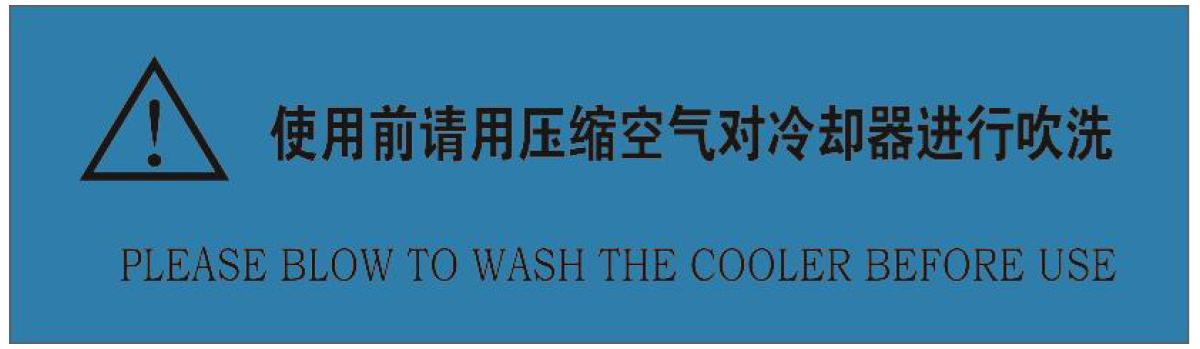
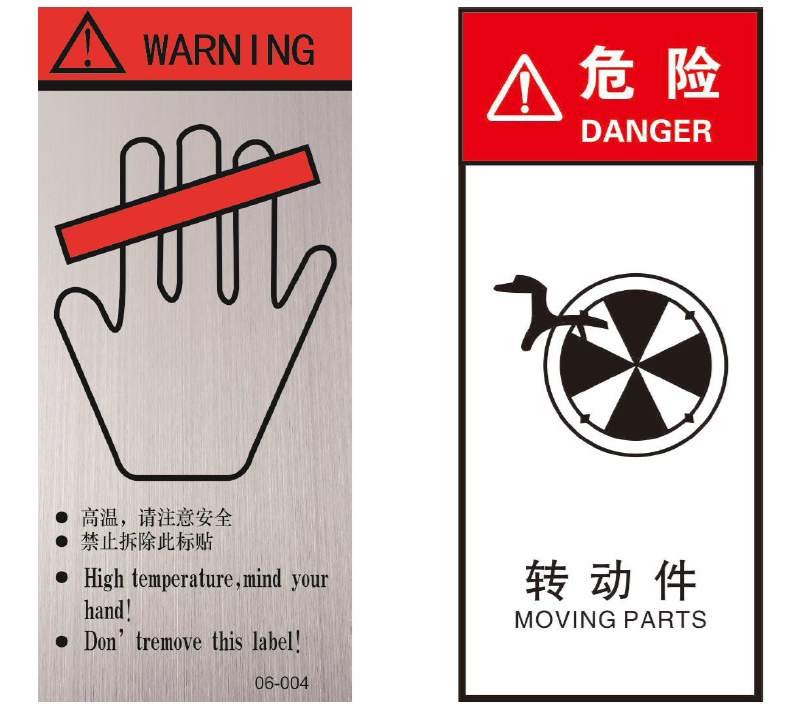
2.12, Warning Sign